
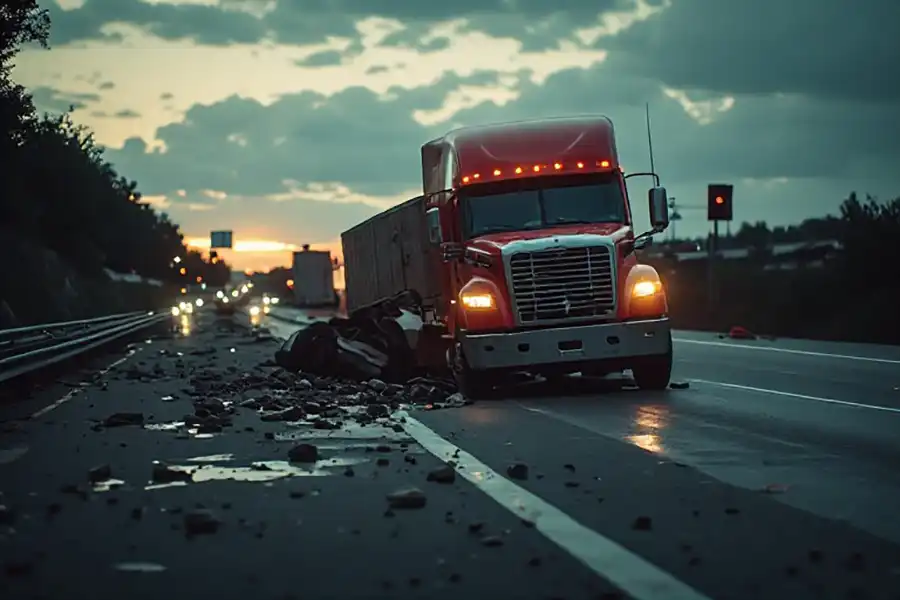
Commercial trucks are a constant presence on Houston highways. From 18-wheelers traveling along I-45, I-10, I-69 and the 610 Loop to delivery trucks, utility vehicles and other commercial vehicles operating throughout the city, Houston drivers regularly share the road with vehicles that are much larger and heavier than ordinary passenger cars.
When one of these vehicles causes a serious collision, determining responsibility may be far more complicated than in a typical car accident.
The truck driver may be responsible, but the investigation should not necessarily stop there. Depending on the circumstances, a trucking company, employer, vehicle owner, maintenance provider, cargo company or another business may also share responsibility.
If you or someone in your family has been seriously injured in a collision involving a large truck, an experienced Houston 18-wheeler accident lawyer can investigate the accident and determine which parties may be legally responsible.
Why Commercial Truck Accidents Are Different
A commercial truck accident is not simply a larger version of a car accident.
Commercial transportation can involve multiple companies, insurance policies, employment relationships, safety regulations and business agreements. The company whose name appears on the truck may not necessarily own the truck, employ the driver, maintain the vehicle or own the cargo.
That can make determining liability one of the most important parts of a truck accident investigation.
A serious truck collision may involve:
- The commercial truck driver
- The driver’s employer
- A trucking or transportation company
- The truck owner
- A trailer owner
- A company leasing the vehicle
- A maintenance or repair provider
- A cargo-loading company
- A manufacturer of defective vehicle parts
- Another contractor or business involved in the transportation operation
Identifying every potentially responsible party is important because commercial truck accidents frequently cause catastrophic injuries and significant financial losses.
The Commercial Truck Driver
The driver is often the first person investigated after a commercial vehicle collision.
Like every motorist, commercial drivers have a responsibility to operate their vehicles safely and follow applicable traffic laws.
Truck driver negligence may involve:
- Speeding
- Distracted driving
- Texting while driving
- Following too closely
- Unsafe lane changes
- Failure to yield
- Running a red light
- Driving while fatigued
- Driving under the influence
- Failing to properly inspect the vehicle
- Driving too fast for weather or traffic conditions
Commercial drivers may also be subject to additional safety requirements that do not apply to ordinary motorists.
For example, federal regulations generally establish limits on how long certain commercial drivers can operate before taking required rest periods.
When fatigue contributes to a crash, driver logs, electronic records and other evidence may become extremely important.
Can the Trucking Company Be Responsible?
Yes, depending on the circumstances.
One of the major differences between an ordinary passenger-vehicle accident and a commercial truck accident is the potential involvement of the driver’s employer or trucking company.
A trucking company may potentially face liability when an employee causes an accident while performing work-related duties.
There may also be questions about whether the company itself acted negligently.
Examples can include allegations involving:
- Negligent hiring
- Inadequate driver training
- Failure to supervise drivers
- Failure to investigate a driver’s history
- Unsafe company policies
- Poor vehicle maintenance
- Pressure to meet unrealistic delivery schedules
- Failure to enforce safety requirements
Each case requires an individual investigation.
The relationship between the driver and the company can also matter. A driver may be classified as an employee, independent contractor or operate under another business arrangement.
Simply labeling someone an independent contractor does not necessarily answer every question about responsibility.
Attorneys investigating serious commercial vehicle accidents may examine employment records, contracts, dispatch records, company policies and the degree of control exercised over the driver.
What If Driver Fatigue Caused the Crash?
Truck driver fatigue can create a significant danger on Houston highways.
Commercial drivers may spend long hours traveling between cities and states. Tight delivery schedules, overnight driving and insufficient rest can reduce a driver’s ability to react safely.
A fatigued driver may experience slower reaction times, poor judgment, difficulty maintaining a lane or even fall asleep behind the wheel.
After a serious accident, an investigation may look at information such as:
- Electronic logging device records
- Driver hours-of-service records
- Delivery schedules
- Fuel receipts
- Toll records
- GPS information
- Dispatch communications
- Cellphone records when legally obtainable
- Hotel or rest records
- Witness statements
This evidence can help establish how long the driver had been operating the vehicle before the collision occurred.
The Importance of Electronic Truck Data
Modern commercial trucks can contain valuable electronic information.
Depending on the truck and equipment involved, electronic systems may provide information concerning vehicle speed, braking, engine activity, driving time or other aspects of the truck’s operation.
This information can become important when the driver and injured motorist disagree about how the crash happened.
For example, electronic evidence may help investigators determine whether the truck slowed before impact or how quickly it was traveling around the time of the collision.
Because some records may not be kept indefinitely, preserving evidence can be an important early step in a commercial truck accident claim.
Can a Maintenance Company Be Liable?
Commercial trucks travel thousands of miles and require regular inspection and maintenance.
Brakes, tires, steering components, lights and other equipment must function properly for the truck to operate safely.
If a maintenance provider performed defective repairs or failed to identify a dangerous mechanical condition, responsibility for an accident may extend beyond the driver and trucking company.
Potential mechanical problems can include:
- Brake failure
- Worn or defective tires
- Steering problems
- Broken lights
- Trailer connection failures
- Suspension problems
- Other defective or improperly maintained components
Maintenance records and inspection reports may help determine whether a mechanical failure contributed to the collision.
Cargo Loading Can Cause Truck Accidents
How cargo is loaded onto a commercial truck can affect the driver’s ability to safely control the vehicle.
Improperly loaded or unsecured cargo may shift while the truck is moving.
That can make a trailer unstable, contribute to a rollover or cause the driver to lose control.
Cargo can also fall from a truck and strike other vehicles.
Depending on the circumstances, a company responsible for loading or securing cargo may potentially be involved in the liability investigation.
Evidence could include loading records, bills of lading, photographs, weight information and documentation showing which company was responsible for preparing the shipment.
Defective Truck Parts and Equipment
Some commercial vehicle accidents may result from defective products rather than driver negligence alone.
For example, an accident investigation could uncover a defective tire, brake component, steering system or another vehicle part.
When a defective product contributes to a collision, the manufacturer, distributor or another company within the product’s chain of distribution may potentially become part of the investigation.
These cases may require technical experts to inspect the vehicle and determine whether equipment failed and why.
Why Multiple Insurance Companies May Be Involved
Commercial truck accidents can involve significantly more insurance coverage than an ordinary car accident.
There may be separate insurance policies covering the truck, trailer, trucking company, driver or another commercial entity.
Multiple insurance carriers can make claims more complicated.
Each insurer may conduct its own investigation and attempt to limit the amount it must pay.
One insurance company may argue that another company bears responsibility. Another may dispute whether its policy applies to the accident.
For an injured person already facing medical treatment and lost income, navigating these competing interests can become overwhelming.
A truck accident attorney can investigate available insurance coverage and communicate with insurers on the client’s behalf.
Injuries Caused by Commercial Truck Accidents
The difference in size and weight between a commercial truck and passenger vehicle can result in devastating injuries.
Victims may suffer:
- Traumatic brain injuries
- Spinal cord injuries
- Neck and back injuries
- Broken bones
- Internal organ damage
- Burns
- Severe lacerations
- Crush injuries
- Amputations
- Permanent disability
- Psychological trauma
Some victims require surgery, rehabilitation and long-term medical treatment.
Others may be unable to return to the same type of employment they had before the collision.
In the most tragic cases, commercial truck accidents result in death and may lead surviving family members to consider a wrongful death claim.
Compensation After a Houston Truck Accident
The compensation available after a commercial truck accident depends on the circumstances of the collision and the losses caused by the injuries.
Potential damages may include:
- Emergency medical expenses
- Hospital bills
- Surgery
- Rehabilitation
- Physical therapy
- Future medical treatment
- Lost wages
- Loss of future earning capacity
- Pain and suffering
- Physical impairment
- Property damage
- Other accident-related losses
Serious injuries require more than simply adding up current medical bills.
Future medical needs, reduced earning ability and long-term limitations may also need to be considered when determining the potential value of a claim.
No lawyer can guarantee how much compensation a particular case will produce. Every accident must be evaluated based on its own facts, evidence, insurance coverage and damages.
What Evidence Is Important After a Truck Accident?
Commercial truck accident cases can produce a large amount of evidence.
Some evidence is available at the accident scene, while other information may be held by the trucking company or another business.
Important evidence can include:
- Police crash reports
- Photographs of the vehicles
- Accident-scene photographs
- Dashcam video
- Traffic camera footage
- Business surveillance footage
- Witness statements
- Electronic logging device information
- Vehicle electronic data
- Driver qualification records
- Dispatch communications
- Maintenance records
- Inspection records
- Employment records
- Cargo documents
- Cellphone records when legally available
- Medical records
An attorney may also work with accident reconstruction specialists or other experts when necessary to understand how the collision occurred.
Evidence May Need to Be Preserved Quickly
One of the most important differences in a commercial truck case is that a trucking company may possess evidence the injured victim cannot personally access.
Some digital records, surveillance footage or business records may eventually be deleted, overwritten or destroyed as part of routine recordkeeping.
For that reason, attorneys may send formal preservation notices requesting that potentially relevant evidence be retained.
Waiting too long to investigate a serious commercial vehicle collision can make certain evidence more difficult to obtain.
What Should You Do After a Commercial Truck Accident?
Your health and safety should come first.
Call 911 when emergency assistance is required and seek appropriate medical treatment.
When possible and safe, document the accident scene before the vehicles are moved.
Photograph:
- Damage to your vehicle
- Damage to the truck
- The truck’s company name
- License plates
- DOT numbers or other identifying information
- Road conditions
- Skid marks
- Traffic signs
- Debris
- Visible injuries
Obtain witness contact information whenever possible.
You should also be cautious when communicating with insurance representatives.
A commercial insurance company may contact you shortly after the accident seeking a statement or asking you to sign documents.
Before providing detailed statements, signing broad medical authorizations or agreeing to a settlement, consider speaking with an attorney about your rights.
What If the Trucking Company Blames You?
A trucking company or its insurer may argue that the injured driver contributed to the collision.
Texas uses a proportionate-responsibility system when determining how fault affects compensation.
That makes evidence particularly important when the parties disagree over what caused the accident.
Do not assume that an insurance company’s version of events is final.
Photographs, witnesses, electronic truck data, police reports and expert analysis may tell a different story.
A thorough investigation can help establish how the accident actually occurred and which parties should be held responsible.
Why Caruthers Law Firm for a Houston Truck Accident?
Truck accident cases require careful investigation because the responsible party may extend beyond the driver sitting behind the wheel.
Caruthers Law Firm represents individuals and families injured because of negligence in Houston and surrounding Texas communities.
The firm has more than 30 years of legal experience and handles personal injury matters including commercial truck and 18-wheeler accidents.
Individuals searching for a Houston African American Personal Injury Attorney can learn more about Beverly R. Caruthers and the firm’s attorneys, experience and approach to representing Houston injury victims.
The firm’s approach focuses on investigating the circumstances surrounding the accident, identifying potentially responsible parties and pursuing compensation available under Texas law.
Injured in a Houston Commercial Truck Accident?
If you or a family member has been injured in an 18-wheeler, delivery truck, company vehicle or other commercial vehicle accident, determining liability should be one of the first steps in evaluating your legal options.
The driver may be responsible, but the trucking company, employer, vehicle owner, maintenance provider or another company could potentially share responsibility depending on how the accident occurred.
Caruthers Law Firm can review the circumstances of your collision and help determine the next steps.
Contact Caruthers Law Firm for a free consultation or call 713-526-9557.
Frequently Asked Questions About Houston Commercial Truck Accidents
Who is usually responsible for an 18-wheeler accident?
There is no single answer. Liability may involve the truck driver, trucking company, employer, truck owner, maintenance company, cargo-loading company or another party. The facts of the accident determine which individuals or businesses may be responsible.
Can I sue the trucking company instead of only the driver?
Potentially. A trucking company may be responsible for the actions of an employee under certain circumstances or may face claims based on its own conduct. The driver’s employment relationship and the company’s role in the accident should be investigated.
What happens if the truck driver fell asleep?
Driver fatigue may become evidence of negligence. Electronic logging records, delivery schedules, GPS information, receipts and other records can potentially help determine how long a driver had been on the road.
What if defective brakes caused the truck accident?
The investigation may consider whether the trucking company properly maintained the vehicle, whether a repair company performed negligent work or whether a defective component contributed to the failure.
Why shouldn’t I accept the trucking company’s first settlement offer?
An early offer may be made before the full extent of your injuries, future medical treatment and financial losses are known. Accepting a settlement generally requires releasing claims against the parties covered by the agreement, so it is important to understand what you may be giving up.
How long do I have to file a truck accident lawsuit in Texas?
Texas generally imposes a two-year limitations period on many personal injury claims, but exceptions and different deadlines may apply depending on the circumstances. Injured individuals should not assume that every case has the same deadline.
What if more than one company is responsible?
Commercial transportation often involves multiple businesses. An investigation may identify more than one potentially responsible party, each with different roles and potentially different insurance coverage.
Do I need a lawyer after a commercial truck accident?
You are not legally required to hire an attorney for every claim. However, serious truck accident cases can involve multiple companies, significant injuries, extensive evidence and commercial insurance carriers. Legal representation can help investigate the collision, preserve evidence, identify potentially responsible parties and evaluate available compensation.